
NeuroEVs – A blood test reflecting brain recovery
An in-depth exploration of the biology behind our stress test and the analysis method we use
Biology: Why can stress be measured in the blood?
Prolonged stress not only affects our well-being but can also leave traces in the body. Tracking these biological markers offers new opportunities in healthcare and proactive wellness. Stress-related mental health issues, such as burnout syndrome, have long been one of the leading causes of sick leave in Sweden. Exhaustion can affect individuals of all ages, and symptoms—fatigue, reduced concentration, and memory—may persist long after the acute stress has subsided.
To understand what happens in the brain during prolonged stress, objective measurements are required. New research indicates that the brain's supporting cells, astrocytes, can release small signaling carriers into the blood under stress. These are called NeuroEVs and can provide insights into how the brain reacts and recovers from stress—a new tool to add to the toolbox.
NeuroEVs are extracellular vesicles released from brain cells, especially astrocytes.
They function as the body's own messengers and can transport biological information between cells.
Research has shown that during prolonged stress, these vesicles can increase in the blood, reflecting changes in brain activity.
Research has shown that levels of NeuroEVs in the blood increase in:
These findings suggest that NeuroEVs could be a promising biological marker for how the brain is affected by chronic stress and how recovery progresses over time.
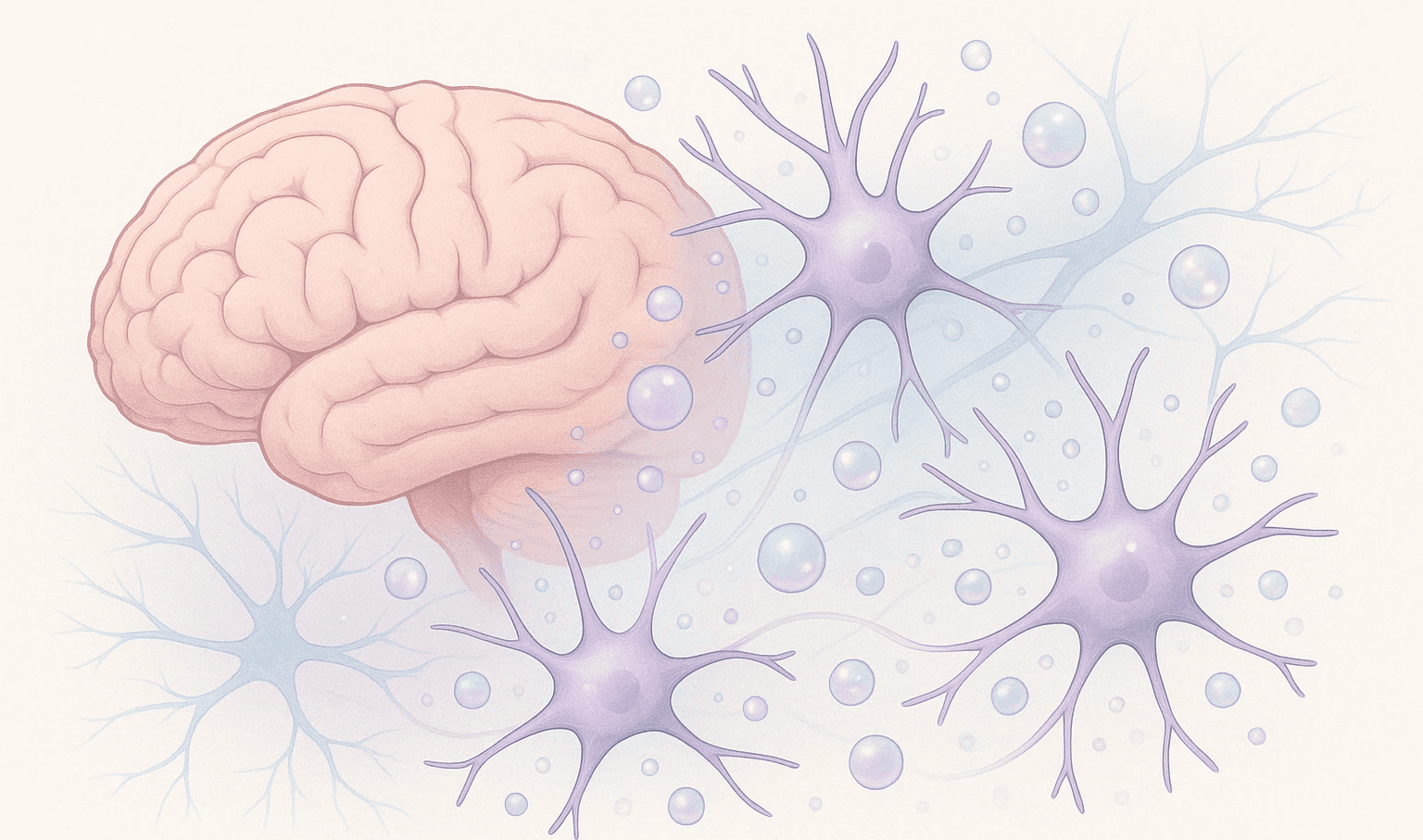
Astrocytes communicate with surrounding cells by releasing small extracellular vesicles, known as NeuroEVs. These can provide clues about how the brain is affected by stress and exhaustion.
Stress and the Brain
The Brain Foundation describes how prolonged stress without sufficient recovery can affect important parts of the brain, including the frontal lobe and amygdala, increasing the risk of stress-related mental health problems and burnout syndrome. At the same time, they emphasize that the brain has the ability to recover when the stress load is reduced and recovery is prioritized. NeuroEVs align with the same core idea—that prolonged stress can affect the brain—but focus on a different level: small extracellular vesicles from brain cells that can reflect how the brain reacts and recovers over time.
Read more about stress and the brain at the Brain Foundation:
– What happens in the brain when we are stressed?
– Stress and the progression of burnout syndrome
The Method: How the Analysis is Conducted
FBMLab has developed and refined methods for measuring brain-related vesicles with high precision.
Supported by scientific publications, we offer the NeuroEV analysis—a tool for monitoring individual changes in the brain's stress response over time. The NeuroEV analysis can also be used as part of a proactive wellness effort, for those who wish to track their brain's recovery over time and detect early signs of prolonged stress. By regularly monitoring your levels, you can gain a better understanding of how lifestyle, sleep, and recovery affect the brain's balance.
The analysis is based on:
Standardized blood sampling for safe and easy testing
Flow cytometric detection of astrocyte-derived vesicles
Advanced data processing and reporting of individual profiles